LexiCog - About

About
Background
The capacity to communicate and reason about beliefs, emotions, intentions, and desires plays a central role in human life. Examples include the expression of love in romantic relationships, strategizing about intentions in a game of chess, reflecting on the causes of grief during psychological therapy, thinking about a child’s knowledge while playing hide and seek, and deliberation of a jury over the intentions of a defendant. Understanding how people communicate mental states is of broad academic and practical importance.
LexiCog aims to provide the first dedicated database of mental state vocabulary items. This database contains extensive mental state vocabulary lists and definitions for numerous world languages. Currently LexiCog contains 313,974 word definitions from across 6 world languages. Of these 313,974 word definitions, 18,132 (5.78%!) represent mental state concepts.Over the coming years we hope to expand the number of languages in LexiCog and provide coverage of a broader range of language families.
LexiCog is currently still a work in progress and only a small sample of mental state definitions is each language can be previewed and downloaded.
Database Construction
LexiCog is build through manually coding the definitions of extensive word lists in each language. Word lists and definitions have been selected from open access and out or copyright sources. These include out of copyright dictionaries, open access word frequency lists, and open access dictionaries. The source of each definition using in LexiCog is cited within the language profile pages.
Mental States
For the purposes of this project we simply define mental states as states of a person’s mind. We used the following three principles to distinguish the states of a person’s mind from other kinds of physical and personal states.
First, mental states are properties of a person. This means that a mental state refers directly to the state of a person, rather than the propensity of something to evoke mental states. For example, in English the word “beautiful” indicates that something tends to generate a particular mental response in people, but does not refer to the mental states themselves. As such, beauty would not be considered a mental state itself. Likewise, describing something or someone as pleasant, agreeable or soothing would not be considered a mental state.
Second, mental states are internal states of a person. This means that mental states are not necessarily perceptible to the human eye. Concepts that involve both a mental and a physical state or process are not considered mental states if the mental state is not a necessary aspect of the concept. For example, facial expressions, whimpers and shudders might be used to express mental states, and frequently accompany mental states, but are not in and of themselves considered mental states.
Third, mental states are changeable rather than dispositional. This means a mental state describes the features of a person’s current state, as opposed to long-term and stable characteristics of the person such as personality traits. Many mental states refer to temporary states, such as saying that someone is scared in a given context. As well as temporary states, mental states can include states that are potentially stable, but capable of revision. Beliefs are an example of a mental state that is changeable but not necessarily temporary. A challenge to distinguish between changeable and dispositional characteristics is that the same terms can be used to describe both. For example, “James is an angry person” refers to a disposition, whereas “James is angry because he lost at Hungry Hungry Hippos” refers to a transitory state. When a definition could be either a personality trait or a mental state, it is still coded as a mental state.
Classes of Mental States
Drawing on the categories used in existing literature, we designed a comprehensive classification scheme that distinguishes between seven classes of mental states. This scheme was designed to capture the classes used in existing literature and be as fine grained as could feasibly be coded. These seven classes are:
Belief/Knowledge
Belief is the acceptance of some proposition, statement or doctrine as true, correct and/or real. Knowledge includes propositional knowledge, just as justified true beliefs, as well as non-propositional knowledge, such as knowing how to do something, or being acquainted with something. This category includes thought processes such as learning, remembering, understanding and counting.
Desire/Wish
A desire or wish occurs when a person would like a particular state of affairs to occur. A state of affairs, also known as a situation, is the state that the world must be in order for a proposition to be true. This category includes hoping, coveting, or being greedy.
Intention
An intention is the mental state that occurs when an individual plans and/or aims to bring about a particular state of affairs. This category includes thought processes such as choosing, deciding, waiting, watching or searching.
Perception
A perception is the representation and identification of sensory information. This sensory information can be conscious or subconscious. This category includes the process of gathering information about the world through the senses and bodily sensations. This category can include things like feeling cold or hot, or hearing a noise.
Emotion
Emotions are the subjective interpretation and categorisation of dynamic mental states. Emotions differ from perceptions in that they involve the categorisation of the broader dispositional state of a person, not just a person’s current sensory information. This broader dispositional state can incorporate the contextual situation of an individual, their cultural background, subjective judgements and personal experiences. Emotions differ from personality traits in that emotions are not just stable dispositions of a person (though they can also be considered stable dispositions). This category includes emotions such as anger, sadness, love or guilt.
Arousal
Arousal refers to the extent of psychophysiological and/or mental activation. This category includes such states as awaking, sleeping, dreaming or fainting.
Other
The Other category includes a range of mental states that do not clearly fit into any of the other classifications. This can include metacognitive states, such as words used to describe the location of emotions and the mind.
These seven classes of mental states are not mutually exclusive and definitions can be classified as more than one mental state. When coding definitions, we treated classifications as also including references to the absence of a particular form of mental state.
The selection of mental states for inclusion in LexiCog was conducted first by a trained research assistant. Whenever feasible, research assistants were fluent in the languages studied. All coding decisions were then checked by a fluent speaker of the language. Some language profiles have had additional contributors, all of whome are listed in the language profile pages.
Data Access
Data is available for download in each of the languages profile pages. This data is shared under a CC BY 4.0 license.
Citing
Watts, J., Low, J., Richter-Gravier, R., & Greenhill, S.J. (2023). LexiCog: The multilingual database of mental state vocabulary items. Retrieved MONTH DATE, YEAR from http://lexicog.culturalevo.com
Team
Investigators
|
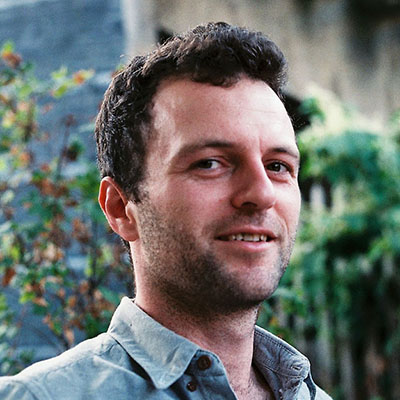
Dr Joseph WattsJoseph investigates how human evolution, culture and cognition interact. He is the Principle Investigator for LexiCog and a Senior Lecturer at the University of Canterbury, New Zealand. |

|
Assoc. Prof. Simon GreenhillSimon researches why and how people created all the amazing languages around us, and what they tell us about human prehistory. He has investigated everything from how the Austronesian peoples settled the Pacific, to modelling the co-evolution of linguistic structure. He is a senior scientist in the Department of Linguistic and Cultural Evolution at the Max Planck Institute for the Science of Human History in Jena, Germany. |

|
Assoc. Prof. Jason LowJason is an Associate Professor in the School of Psychology at Victoria University of Wellington, and is a Member of the Editorial Board of The British Journal of Developmental Psychology. He is an experimental psychologist and he is interested in the cognitive and sensorimotor processes that underpin human mindreading abilities. |
|
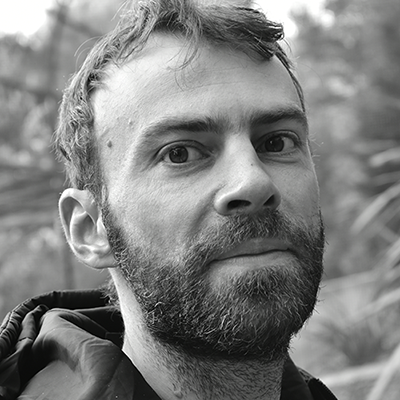
Dr Raphael Richter-GravierOriginally from Paris, Raphael completed a Master of Arts (History and Library Science) in France before moving to New Zealand. He completed a PhD in Māori Studies and Anthropology at Otago in co-tutelle with the University of French Polynesia in 2019. His thesis investigated the role of birds in traditional Polynesian narratives by compiling a corpus of 300 stories and systematically categorising the narrative roles of the birds to show how Polynesians used these creatures in their stories. Raphael is a polyglot who speaks French, English, Spanish and Māori fluently. Contributed to: Māori, Samoan, French, English, Spanish, Tongan |
Collaborators and contributors

|
Marine BrianneContributed to: French |
|
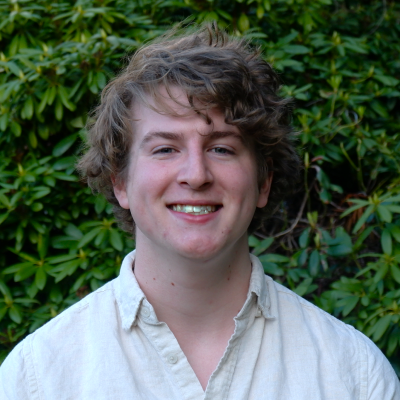
Aaron HewsonAaron’s academic interests cover science and humanities; in the humanities, this is broadly Buddhism, modern Japanese culture, and the interactions between people and nature. For the science realm, he is interested in sustainable agriculture, genetic technologies, and plant breeding. Contributed to: Māori, English |
|
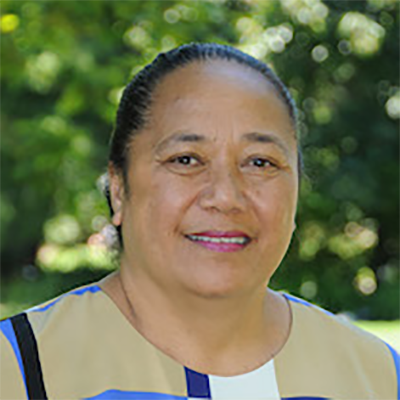
Dr Telesia KalaviteTelesia has a wide range of research capabilities and interests in the disciplines of: Education Studies; Pacific Studies; Social Science; Linguistics; Cultural Studies; and Development Studies. In particular her interests lie in: Pacific educational development; Pacific students’ educational achievement; Education for sustainable development; Educational achievement for migrant communities; Pacific culture; Pacific culture and education for sustainability; Culture and educational achievement; Culture and sustainable development in the Pacific. Contributed to: Tongan |
|
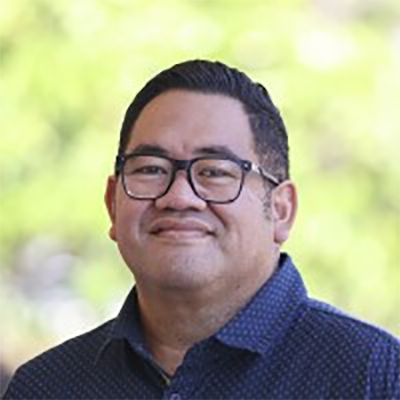
Dr Michael LigaligaMichael Fusi Ligaliga is an assistant professor and Program Lead of Pacific Island Studies at BYU–Hawaii. His research interests are family and domestic violence in the Pacific and the global Pacific diaspora. He also specializes in peace and conflict issues impacting the Pacific region. He received his bachelor’s degree in political science and a minor in intercultural peacebuilding from BYU–Hawaii, and a master’s and PhD in peace and conflict from the National Center for Peace and Conflict Studies (NCPACS), University of Otago, New Zealand. Michael hails from the villages of Saleimoa and Mutiatele, Samoa. He is married to Faalima Ligaliga (nee Fepuleai) and are parents to two children, Joanie and Leahcim. Contributed to: Samoan |
|
|
Valeska OliveraContributed to: Spanish |
|
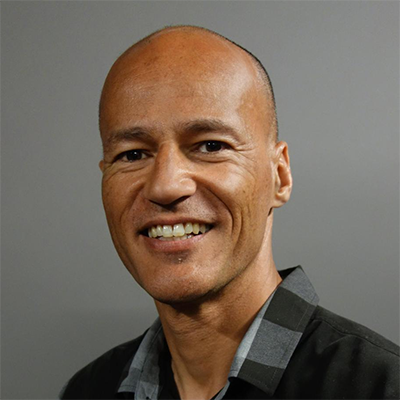
Dr Matiu RatimaThere are three key themes to Matiu’s work: the development of proficiency in te reo Māori, culturally responsive teaching, and the effectiveness of professional development for the cultural competence of teachers. Central to all of his work is the firm conviction that the revival of te reo and tikanga Māori are foundational to Māori success and to the cohesion of New Zealand as a nation who cares for the well-being of our most vulnerable citizens. Contributed to: Māori |

|
Maioha WatsonMaioha Watson is a graduate of Te Tumu, the School of Māori, Pacific and Indigenous Studies at the University of Otago. He is of Tainui, Ngāi Tūhoe, Ngāti Manawa and Te Āti Awa descent. Maioha was raised in Hamilton and grew up immersed in te ao Māori, attending Te Kōhanga Reo, Kura Kaupapa Māori and Wharekura. Maioha’s passions include te reo, tikanga and mātauranga Māori. Contributed to: Māori |
Funding
This project was funded by the grant titled “Cross-cultural Patterns in Theory of Mind: Using text analytics to identify structure and variation in mental state attributions in the Pacific”. This grant was provided by the Marsden Fund from The Royal Society of New Zealand Te Apārangi (19-VUW-188).
FAQ
Does LexiCog provide a comprehensive list of all mental states in a language?
LexiCog provides an extensive but not complete list of mental state definitions. Each word list is based on complete searches of commonly used words in each language. These word lists provide extensive lists of commonly used terms. For example, the English list of mental states is based on a search of 60,010 words with 110,510 definitions. This is larger than the average English speaks vocabulary is likely to be, but not a complete list of all words in the English language. Information about the word list used to construct the index of mental states in each language is provided in each of the languages profile pages.
How comparable are the wordlists of different languages?
The coding processes used to identify and classify mental states definitions is standardized across language profiles. This means that definitions of mental states should be consistent across language profiles.However, the types of word lists coded do differ across languages. For example, some word lists are based on a complete search of language dictionaries, while others are based on word lists generated based on the frequency of use in web crawl data. This means that language profiles can differ in the kinds of words that have been coded, as well as how comprehensive these word lists are. Information about the word lists that have been coded are available in each languages profile page.
Can I use LexiCog data in my own research?
Yes, data is shared under a CC BY 4.0 license. If you use LexiCog data please cite the LexiCog database.
Can I contribute to LexiCog?
if you are interested in expanding the existing entries for a language or adding a new language, please get in touch with us at lexicog@culturalevo.com. We welcome contributions by people that can meet our data quality requirements.
LexiCog data is shared under a CC BY 4.0 license.
Information on citing is available here.
This project was funded by
The Royal Society of New Zealand Te Apārangi
 |
 |